
In the competitive landscape of e-commerce, crafting SEO-friendly product titles is paramount to driving sales and achieving online success. A well-optimized product title not only helps search engines understand what your product is but also entices potential customers to click and explore further. This article delves into the essential tips and tricks for writing product titles that rank high in search results, attract qualified traffic, and ultimately boost your e-commerce sales. Learn how to strategically incorporate relevant keywords, optimize title length for maximum impact, and create compelling copy that captures attention and converts browsers into buyers.
Mastering the art of writing effective product titles is a crucial element of any successful SEO strategy for e-commerce. By understanding how search engines interpret product titles and how customers interact with them, you can significantly enhance your product visibility and drive organic traffic to your online store. This guide will provide you with practical techniques to optimize your product titles for both search engines and users, ensuring they are informative, engaging, and ultimately contribute to increased sales and a thriving e-commerce business.
Understanding the Importance of SEO-Friendly Product Titles
In the competitive landscape of e-commerce, product titles are the first, and often only, impression you make on potential customers. A well-crafted, SEO-friendly title doesn’t just describe your product; it acts as a powerful marketing tool, driving traffic and boosting sales.
Search engine optimization (SEO) plays a crucial role in ensuring your products are discoverable by search engines. Effective product titles incorporate relevant keywords that match customer search queries, increasing your product’s visibility in search results. Higher visibility translates to increased organic traffic, driving potential buyers directly to your product pages.
Beyond visibility, SEO-friendly titles improve click-through rates (CTR). A compelling title that accurately reflects the product and its benefits entices users to click and learn more. This targeted approach ensures that the traffic you attract is genuinely interested in what you offer, increasing the likelihood of conversions.
Finally, optimized product titles contribute to a positive user experience. Clear, concise, and informative titles enable shoppers to quickly identify relevant products, saving them time and frustration. This positive experience fosters trust and encourages customers to explore your offerings further.
Keyword Research for Product Titles
Effective keyword research is the foundation of SEO-friendly product titles. Understanding what terms your target audience uses to search for products like yours is crucial.
Start by brainstorming a list of relevant keywords. Think about different variations, synonyms, and long-tail keywords (longer, more specific phrases). Tools like Google Keyword Planner, Ahrefs, and SEMrush can help you discover related keywords, analyze search volume, and assess keyword competition.
Analyze search results. Observe the product titles used by your top competitors on search engine results pages (SERPs). This can provide valuable insights into effective keyword usage and phrasing.
Consider user intent. What are customers looking for when they search for a specific keyword? Align your product titles with user intent to improve click-through rates.
Structuring Your Product Titles for Maximum Impact
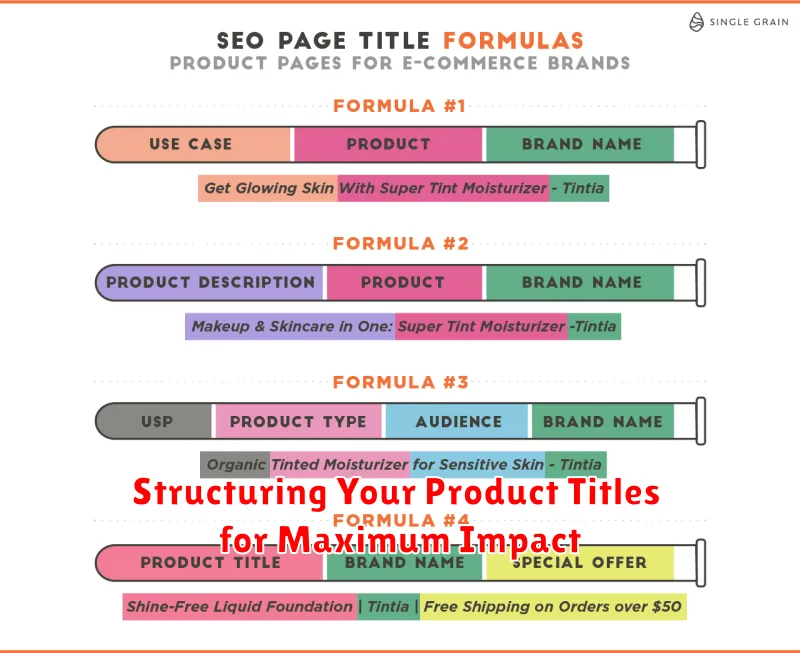
A well-structured product title is crucial for both search engine visibility and click-through rates. Consider these structural elements:
Key Information First
Place the most important keywords at the beginning of your title. This ensures they are seen, even on smaller screens or truncated search results. Prioritize product name, brand, and key differentiating features.
Character Limits
Adhere to character limits recommended by different search engines to avoid truncation. While guidelines vary, aiming for around 60 characters is generally a safe practice. Conciseness is key.
Using Separators
Use separators like pipes (|) or dashes (-) to clearly distinguish different elements within the title. This improves readability and helps search engines understand the information hierarchy. For example, “Brand – Product Name – Key Feature | Color”.
Optimizing Product Titles for Different Search Engines
While core SEO principles remain consistent, slight nuances in how search engines interpret and rank product titles exist. Tailoring your approach for specific platforms can yield improved visibility and click-through rates.
Google: Prioritize conciseness and accuracy. Focus on the most relevant keywords and keep titles under 60 characters to avoid truncation in search results. Accurately reflecting product attributes helps Google understand and rank your products effectively.
Bing: Similar to Google, Bing values relevance and accuracy. However, Bing tends to place slightly more emphasis on brand recognition. Consider incorporating your brand name, if space allows, particularly for established brands.
Amazon: Product titles on Amazon serve a dual purpose: ranking in search and converting browsers into buyers. Leverage all available character space (up to 200 characters) to include key features, benefits, and variations. Keywords play a crucial role, but readability and conveying value are equally important.
Other Platforms: For niche marketplaces or social commerce platforms, understanding their specific search algorithms and user behavior is critical. Consult platform-specific documentation or analyze competitor listings to determine best practices.
Best Practices for Writing Compelling Product Titles
Crafting compelling product titles requires a balance of SEO best practices and engaging language that resonates with customers. Here are key guidelines to follow:
Keep it Concise and Accurate
Brevity is key. Aim for titles under 60 characters to avoid truncation on search engine results pages (SERPs). Accuracy is paramount; misrepresenting your product will lead to dissatisfied customers.
Highlight Key Features and Benefits
Showcase the most important attributes of your product. Focus on what problems it solves or benefits it provides. Use terms like “waterproof,” “lightweight,” or “organic” to quickly convey value.
Use Strong Keywords, But Naturally
Incorporate relevant keywords discovered through your research. However, avoid keyword stuffing, which can harm your SEO. Prioritize a natural-sounding title that reads well for humans.
Target Your Ideal Customer
Consider the language and needs of your target audience. Speak directly to their desires and pain points to create a connection and increase click-through rates.
Test and Iterate
Continuously analyze the performance of your product titles. A/B test different versions to determine which ones generate the most clicks and conversions. Refinement is an ongoing process.
Common Mistakes to Avoid
Crafting effective product titles requires a strategic approach. Avoid these common pitfalls to maximize your impact:
Keyword Stuffing
While keywords are crucial, overusing them makes your titles appear spammy and can hurt your search ranking. Focus on a natural flow and prioritize readability.
Ignoring Your Target Audience
Know your customer! Use language that resonates with them and addresses their specific needs and interests.
Being Too Vague
Generic titles don’t stand out. Be specific about what makes your product unique and highlight key features to capture attention.
Neglecting Mobile Optimization
Mobile is king. Ensure your titles are concise enough to display correctly on smaller screens without being truncated.
Forgetting the Brand
Where appropriate, subtly incorporating your brand name can enhance recognition and build trust.
A/B Testing Your Product Titles for Better Performance
A/B testing, also known as split testing, is a crucial step in optimizing your product titles for maximum impact. It involves comparing two versions of a title to see which performs better.
How to A/B test your titles:
- Create Variations: Develop two slightly different versions of your title. Change one element at a time, such as keywords, length, or phrasing.
- Split Your Traffic: Divide your product page traffic equally between the two title versions.
- Monitor Key Metrics: Track important metrics like click-through rates (CTR), conversion rates, and bounce rates for each variation.
- Analyze Results: After a sufficient period, analyze which version performed better based on your chosen metrics.
- Implement the Winner: Apply the winning title to your product page to improve its performance.
What to Test:
- Keywords: Experiment with different relevant keywords to see which ones resonate most with your target audience.
- Length: Test shorter vs. longer titles to find the optimal length for your platform and audience.
- Call to Action: Consider incorporating subtle calls to action within your titles to encourage clicks.
- Pricing/Promotions: If applicable, test mentioning price or promotions directly in your titles.
Using Tools to Help Write SEO-Friendly Titles
Crafting effective product titles can be time-consuming. Fortunately, various tools can streamline the process and improve your SEO results. These tools can assist with keyword research, competitor analysis, and title optimization.
Keyword research tools help identify relevant keywords customers use when searching for products like yours. Understanding search volume and competition for specific keywords can inform your title choices. Some popular options include SEMrush, Ahrefs, and Google Keyword Planner.
Competitor analysis tools allow you to examine the product titles used by your competitors. This can reveal successful strategies and highlight keywords they’re targeting. Tools like Moz and SpyFu can provide valuable competitive insights.
Title optimization tools can analyze your drafted titles and suggest improvements. These tools often assess factors like keyword density, character count, and readability. Examples include CoSchedule’s Headline Analyzer and Portent’s Content Idea Generator.
