
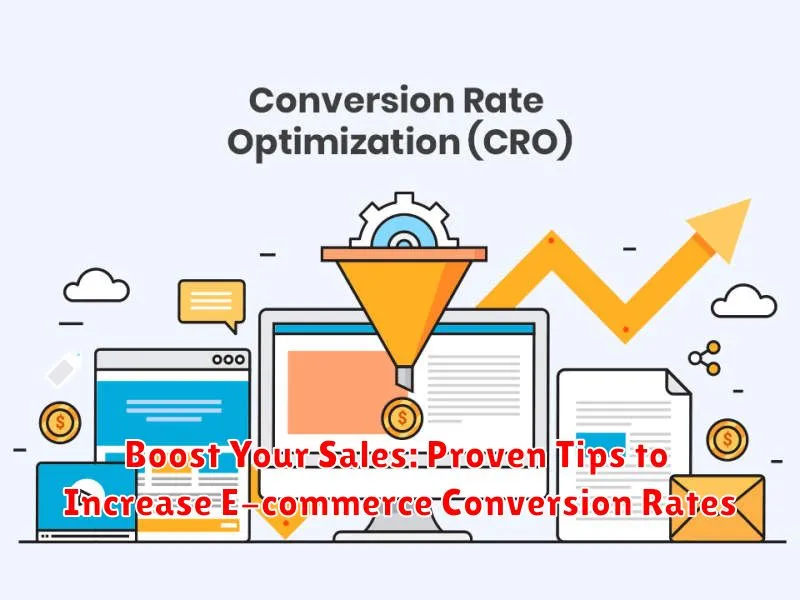
In today’s competitive digital landscape, simply driving traffic to your e-commerce store isn’t enough. You need to convert those visitors into paying customers. This article focuses on actionable and proven tips to boost your sales by significantly increasing your e-commerce conversion rates. We’ll explore strategies to optimize your online store for higher conversions, turning casual browsers into loyal purchasers and maximizing your return on investment.
From optimizing your website’s user experience and streamlining the checkout process to leveraging persuasive marketing tactics and building trust with your audience, we’ll cover a range of practical techniques to increase e-commerce conversion rates. Whether you’re a seasoned online retailer or just starting out, these proven tips will empower you to boost your sales and achieve sustainable growth in the dynamic world of e-commerce.
Understanding E-commerce Conversion Rates
In the world of e-commerce, understanding your conversion rate is paramount. It’s the key metric that measures the effectiveness of your online store in turning visitors into paying customers.
Simply put, your e-commerce conversion rate is the percentage of visitors who complete a desired action, typically a purchase. It’s calculated by dividing the number of conversions by the total number of visitors, then multiplying by 100.
For example, if your website had 1,000 visitors and 20 of them made a purchase, your conversion rate would be 2%.
Tracking and analyzing your conversion rate is essential for identifying areas for improvement and ultimately, increasing your sales. A low conversion rate might indicate issues with website usability, product pricing, or the checkout process. By understanding this metric, you can pinpoint these problems and optimize your strategies for better results.
Optimizing Your Website for Conversions
A well-optimized website is crucial for driving conversions. Website speed plays a significant role. A slow-loading site can lead to frustrated customers and abandoned carts. Invest in reliable hosting and optimize images to ensure quick loading times.
Navigation is another key element. A clear and intuitive navigation structure allows customers to find what they’re looking for quickly and easily. Implement a logical menu system and consider incorporating a search bar for efficient product discovery.
Mobile responsiveness is no longer optional. With a significant portion of online traffic coming from mobile devices, ensure your website is fully responsive and provides a seamless experience across different screen sizes. Test your site thoroughly on various devices.
Improving Product Pages for Higher Sales
Product pages are the heart of your e-commerce store. Optimizing them is crucial for converting browsers into buyers. High-quality product pages build trust and encourage purchases.
Compelling Product Descriptions: Avoid generic manufacturer descriptions. Write unique, benefit-driven content that highlights how the product solves a customer’s problem. Use clear and concise language, focusing on the value proposition.
High-Quality Product Images: Showcase your products with multiple, high-resolution images from various angles. Consider incorporating zoom functionality and lifestyle shots to give customers a better sense of the product.
Customer Reviews and Testimonials: Displaying positive reviews builds credibility and encourages trust. Feature testimonials prominently on product pages to demonstrate social proof and influence purchase decisions.
Clear Call-to-Actions: Make it easy for customers to add items to their cart with clear and prominent “Add to Cart” buttons. Use persuasive language and consider A/B testing different button styles and placements.
Creating a Seamless Checkout Experience
A complicated or frustrating checkout process is a major reason for cart abandonment. Streamlining this experience is crucial for boosting conversions. Minimize the number of steps required to complete a purchase. Offer guest checkout options to avoid forcing account creation.
Clearly display all costs upfront, including shipping, taxes, and any other fees. Unexpected charges at the end are a significant deterrent. Provide multiple payment options to cater to different customer preferences. Accepting major credit cards, digital wallets, and other popular methods increases convenience.
Optimize the checkout process for mobile devices. Ensure the forms are easy to fill out on smaller screens and the buttons are large enough to tap comfortably. A responsive design is essential for capturing mobile sales.
Offer order tracking and confirmation emails to keep customers informed about their purchase status. This transparency builds trust and reduces anxiety about the delivery.
Leveraging Social Proof

Social proof is a powerful tool to build trust and encourage purchases. By showcasing the positive experiences of others, you can significantly influence potential customers.
Customer Testimonials: Featuring genuine testimonials on your website can build credibility. Highlight positive experiences and how your product or service solved a problem for the customer.
Reviews and Ratings: Encourage customers to leave reviews and ratings. Display them prominently on product pages. A high average rating can greatly impact purchase decisions.
Social Media Engagement: Showcase positive social media mentions and user-generated content. Embed social media feeds on your website to demonstrate active engagement and community.
Influencer Marketing: Collaborating with relevant influencers can expose your brand to a wider audience and build trust through their endorsement.
Trust Badges and Security Seals: Display trust badges from recognized organizations to reassure customers about the security of their transactions and the legitimacy of your business.
The Power of Email Marketing for Conversions
Email marketing remains a powerful tool for driving e-commerce conversions. It allows businesses to connect directly with customers, nurture relationships, and encourage purchases.
Personalized email campaigns are key. Segmenting your audience based on demographics, purchase history, and browsing behavior enables you to tailor messaging for maximum impact. For instance, a welcome email series for new subscribers can introduce your brand and highlight best-selling products.
Abandoned cart emails are another effective strategy. These automated emails remind customers of items left in their online shopping carts, offering a gentle nudge to complete the purchase. Including a small incentive, like free shipping or a discount code, can further encourage conversions.
Promotional emails highlighting sales, new arrivals, and exclusive offers can create a sense of urgency and entice customers to shop. Ensure these emails are visually appealing and easy to read, with clear calls to action.
Retargeting Strategies for Better Results
Retargeting is a powerful strategy to recapture potential customers who have shown interest in your products but haven’t completed a purchase. By strategically displaying ads to these individuals, you can effectively re-engage them and guide them back to your online store.
Several retargeting strategies can significantly improve your conversion rates. Pixel-based retargeting uses a tracking pixel to identify visitors to your website and then displays targeted ads as they browse other sites. This keeps your products top-of-mind, encouraging a return visit.
List-based retargeting leverages customer data, such as email addresses, to create targeted ad campaigns. This method is particularly effective for reaching out to shoppers who abandoned their carts or previously purchased from you.
Dynamic retargeting takes personalization a step further. It displays ads featuring the specific products a customer viewed or added to their cart. This tailored approach reminds shoppers of their initial interest and increases the likelihood of conversion. Consider these different retargeting methods to create a comprehensive strategy for your business.
Using A/B Testing to Refine Your Approach
A/B testing, also known as split testing, is a crucial tool for optimizing your e-commerce website and boosting conversion rates. It involves comparing two versions of a webpage element to see which performs better. By making data-driven decisions, you can continually improve your website’s effectiveness.
Identify Key Elements to Test: Focus on elements that directly impact conversions, such as headlines, call-to-action buttons, product descriptions, and form fields. Don’t try to test too many elements at once.
Create Variations: Develop variations (Version B) of the chosen element. These variations should be distinct enough to provide meaningful results. For instance, you might test different wording for your call-to-action, change button colors, or adjust the layout of a product page.
Run the Test: Use A/B testing software to randomly show different versions to visitors and track their behavior. Ensure a statistically significant sample size to draw accurate conclusions.
Analyze and Implement: Once the test is complete, analyze the results. Identify the winning variation based on key metrics like conversion rate, click-through rate, and average order value. Implement the winning variation on your website.
Analyzing and Measuring Your Progress
Analyzing and measuring your e-commerce conversion rate progress is crucial for continuous improvement. It helps you understand what’s working, what’s not, and where to focus your optimization efforts. Regular monitoring provides valuable insights into customer behavior and the effectiveness of your strategies.
Key metrics to track include:
- Conversion Rate: The percentage of visitors who complete a desired action (e.g., purchase).
- Average Order Value (AOV): The average amount spent per order.
- Customer Lifetime Value (CLTV): The predicted total revenue from a customer over their relationship with your business.
- Bounce Rate: The percentage of visitors who leave your site after viewing only one page.
- Cart Abandonment Rate: The percentage of shoppers who add items to their cart but don’t complete the purchase.
Utilize analytics platforms like Google Analytics to gather and analyze this data. Set up custom reports and dashboards to visualize key trends and identify areas for improvement. Regularly review your data to make informed decisions about your marketing and sales strategies.
