
Cart abandonment is a significant challenge for e-commerce businesses. It represents the frustrating reality of potential customers adding items to their online shopping carts, only to leave the website before completing the purchase. This translates directly to lost sales and diminished revenue. Understanding the underlying reasons for cart abandonment is the first crucial step towards implementing effective strategies to reclaim these lost sales and boost your bottom line. This article will delve into the complexities of this issue, examining the various factors that contribute to cart abandonment and offering practical solutions to combat it.
From unexpected shipping costs and complicated checkout processes to security concerns and a lack of payment options, numerous obstacles can deter a customer from finalizing their purchase. Addressing these issues is key to optimizing the customer journey and minimizing cart abandonment. By exploring proven strategies and best practices, you can effectively reclaim lost sales, improve conversion rates, and ultimately, drive business growth. This exploration will empower you to implement targeted solutions, turning abandoned carts into completed purchases and maximizing your e-commerce success.
Defining Cart Abandonment and Its Impact
Cart abandonment is a critical challenge in e-commerce, referring to the phenomenon where potential customers add items to their online shopping carts but leave the website before completing the purchase. This translates to lost revenue and represents a significant hurdle for businesses striving to maximize their sales.
The impact of cart abandonment is substantial. It directly affects the bottom line by reducing the number of completed transactions. While some cart abandonment is inevitable, high rates can signal underlying problems with the user experience or checkout process. Accurately measuring and understanding cart abandonment rates is the first step towards implementing effective strategies to mitigate its effects.
Measuring cart abandonment rate involves calculating the percentage of initiated sales that are not finalized. This is done by dividing the number of completed purchases by the number of initiated sales (adding items to the cart) and then subtracting the result from 1. For example, if 100 customers add items to their carts but only 30 complete the purchase, the abandonment rate is 70%.
Why Shoppers Abandon Their Carts
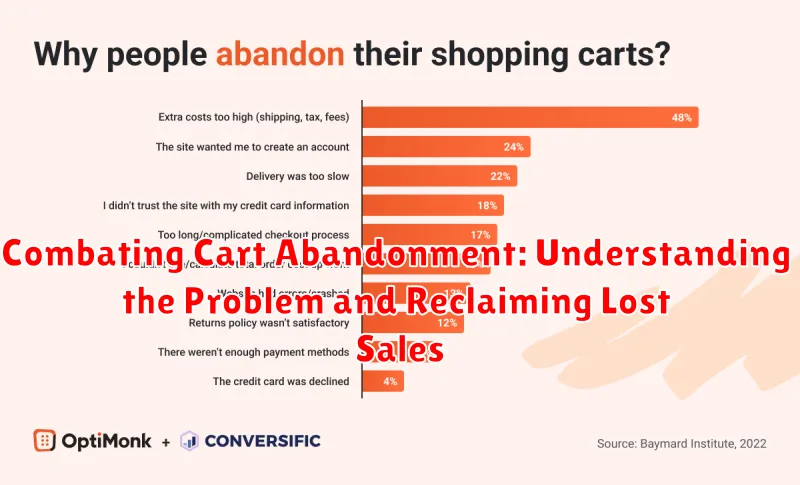
Understanding why shoppers abandon their carts is the first step towards reclaiming those lost sales. A variety of factors contribute to this issue, ranging from simple browsing behavior to more complex technical and financial hurdles.
Unexpected Costs are a major deterrent. High shipping fees, taxes, or other surcharges revealed late in the checkout process can cause sticker shock and lead to abandonment. Complicated Checkout Processes involving multiple steps, forced account creation, or lengthy forms can frustrate shoppers and drive them away.
Sometimes, shoppers are simply Just Browsing or comparing prices. They may add items to their cart as a way of saving them for later or comparing them across different websites. Website Issues such as slow loading times, security concerns, or a poor mobile experience can also contribute to cart abandonment.
Other reasons include Payment Security Concerns, lack of preferred payment methods, and Limited Shipping Options. Occasionally, shoppers may encounter Technical Errors during the checkout process that prevent them from completing the purchase.
Strategies to Minimize Cart Abandonment
Minimizing cart abandonment requires a multi-pronged approach, focusing on improving user experience and providing incentives to complete the purchase. Transparency is key throughout the process.
Offer multiple payment options. Customers may abandon their carts if their preferred payment method isn’t available. Providing a variety of choices, including credit cards, digital wallets, and buy-now-pay-later services, can significantly reduce abandonment rates.
Clearly display shipping costs upfront. Unexpected costs added at checkout are a major deterrent. Be transparent about shipping fees early in the shopping journey, ideally on the product page. Consider offering free shipping above a certain purchase threshold to incentivize larger orders.
Streamline the checkout process. A lengthy or complicated checkout process can frustrate customers and lead to abandonment. Minimize the number of required fields and steps. Guest checkout options can be beneficial for first-time buyers.
Provide robust customer support. readily available customer support can address any questions or concerns that might arise during the purchase process. Offer live chat, email, and phone support to cater to different customer preferences.
Optimizing the Checkout Process for Completion
A streamlined and user-friendly checkout experience is crucial for reducing cart abandonment. Friction at this stage can easily deter customers from completing their purchase.
Minimize required fields. Only ask for essential information. Long forms can be intimidating and time-consuming.
Offer guest checkout. Requiring account creation can be a barrier for first-time buyers. Allow customers to checkout without registering.
Clearly display all costs. Unexpected shipping fees or taxes are a common reason for abandonment. Transparency builds trust.
Provide multiple payment options. Offering various payment methods caters to a wider customer base and increases convenience.
Optimize for mobile. Ensure your checkout process is responsive and functions flawlessly on all devices. Mobile optimization is essential in today’s e-commerce landscape.
Effective Use of Exit-Intent Popups
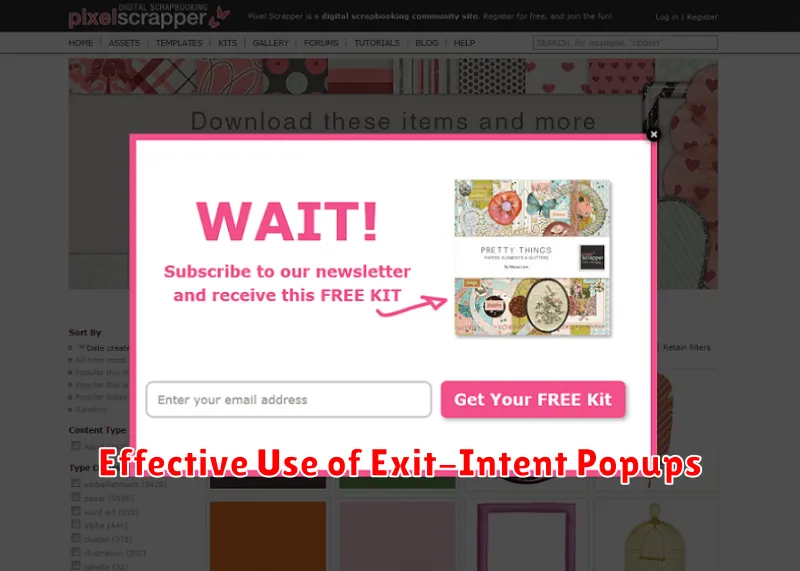
Exit-intent popups are a powerful tool to re-engage shoppers who are about to abandon their carts. These popups are triggered when a user’s mouse cursor moves towards the browser’s close button or address bar, indicating their intention to leave the site. Used strategically, they can be a highly effective way to recapture lost sales.
Timing is crucial. Popups that appear too early can be disruptive and annoying. Triggering them just as the user is about to leave provides a final opportunity to persuade them to stay. The content within the popup is equally important. Avoid generic messages. Instead, offer personalized incentives relevant to the items in the user’s cart.
Consider offering a discount code, free shipping, or a limited-time offer to create a sense of urgency. Clearly communicate the value proposition and make it easy for shoppers to redeem the offer. Keep the popup design clean and concise, with a clear call to action. Finally, don’t overuse exit-intent popups. Bombarding users with multiple popups can be counterproductive and damage the user experience.
Testing and optimization are key to finding the right balance between engagement and intrusion. Experiment with different offers, copy, and trigger timing to maximize the effectiveness of your exit-intent popups.
Leveraging Email Marketing to Recover Lost Sales
Email marketing offers a highly effective strategy for re-engaging customers who have abandoned their carts. By sending targeted email reminders, businesses can effectively nudge customers back to complete their purchases. A series of strategically timed emails can significantly impact recovery rates.
The first email, sent within an hour of cart abandonment, serves as a gentle reminder. It should include images of the abandoned items and reiterate any applicable shipping costs or discounts.
A second email, sent approximately 24 hours later, can highlight the benefits of the product and instill a sense of urgency, perhaps by mentioning limited stock. Offering a small incentive, like free shipping or a discount code, can further entice the customer.
A final email, sent 72 hours after abandonment, could be the last attempt to recover the sale. This email might offer a larger discount or emphasize customer testimonials and product reviews as social proof.
Personalization is key throughout the email sequence. Addressing the customer by name and showcasing products related to their abandoned items contributes to a more compelling and effective recovery strategy. Analyzing data related to cart abandonment allows for further refinement and optimization of the email campaign.
Remarketing Tactics for Cart Abandonment
Remarketing is a powerful tool to re-engage shoppers who have abandoned their carts. By strategically targeting these potential customers, businesses can effectively remind them of their intended purchases and encourage them to complete the checkout process.
Display Ads: Visually appealing ads showcasing abandoned items can be displayed across various websites and social media platforms frequented by the target audience. These ads serve as a visual reminder, keeping the products top-of-mind.
Social Media Remarketing: Utilizing platforms like Facebook and Instagram, businesses can target users who have shown interest in their products or added items to their cart. Personalized ads featuring the abandoned items can be displayed within their social media feeds.
Dynamic Remarketing: This advanced technique takes remarketing a step further by displaying ads that feature the specific products or services abandoned by each individual user. This personalized approach significantly increases the relevance and effectiveness of the ads.
Cart Abandonment Analytics and Reporting
Effective cart abandonment recovery starts with robust analytics and reporting. Understanding the scope of the problem is crucial for implementing targeted solutions. Tracking key metrics provides valuable insights into customer behavior and identifies areas for improvement.
Essential metrics to monitor include the cart abandonment rate, average order value (AOV) of abandoned carts, and products most frequently abandoned. Analyzing these data points helps pinpoint friction points in the checkout process and informs strategies for optimization.
Segmenting abandoned carts based on customer demographics, purchase history, or cart value allows for more personalized recovery campaigns. For example, customers abandoning high-value carts might warrant a more proactive outreach than those abandoning lower-value items.
Regular reporting on cart abandonment trends enables businesses to continuously evaluate the effectiveness of recovery strategies and make data-driven adjustments to maximize reclaimed sales.
Calculating Cart Abandonment Rate
Calculating your cart abandonment rate is crucial to understanding the scope of the issue and the potential revenue you’re losing. It’s a straightforward calculation that provides valuable insights into your checkout process.
The formula is:
(Total Number of Completed Transactions / Total Number of Initiated Transactions) * 100 = Cart Abandonment Rate
For example, if you had 100 initiated transactions (customers adding items to their cart) and 30 completed transactions (successful purchases), your cart abandonment rate would be:
(30 / 100) * 100 = 30%
This means that 70% of your potential customers abandoned their carts. Tracking this rate over time allows you to identify trends and measure the effectiveness of your cart abandonment recovery strategies.
