
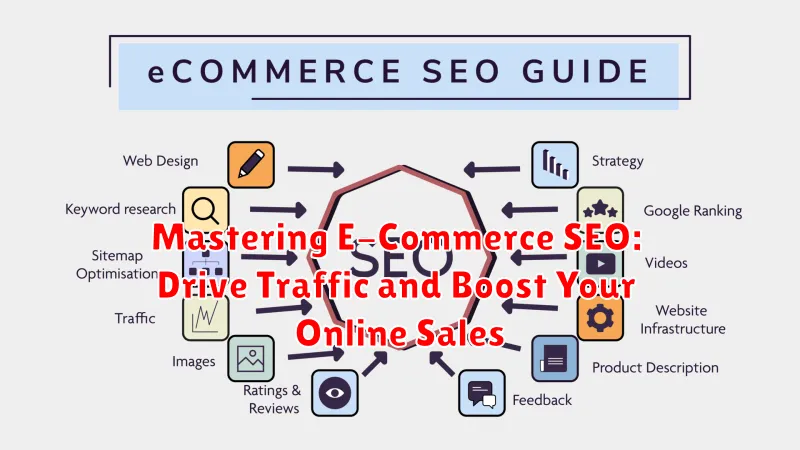
In today’s competitive digital landscape, e-commerce SEO is no longer a luxury, but a necessity. Mastering the intricacies of search engine optimization (SEO) is crucial for online businesses seeking to thrive. This article serves as your comprehensive guide to understanding and implementing effective e-commerce SEO strategies. Learn how to drive targeted traffic to your online store, enhance your online sales, and ultimately achieve sustainable growth in the ever-evolving world of e-commerce.
From keyword research and on-page optimization to technical SEO and link building, we’ll explore the key components of a winning e-commerce SEO strategy. Discover actionable tips and techniques to optimize your product pages, improve your website’s visibility in search engine results pages (SERPs), and attract high-quality traffic that converts into paying customers. This guide will empower you to boost your online sales and establish a dominant online presence.
Understanding the Basics of E-Commerce SEO
E-commerce SEO is the practice of optimizing your online store to rank higher in search engine results pages (SERPs) for relevant keywords. Increased visibility translates to more organic (non-paid) traffic, leading to higher potential for sales and revenue.
Unlike traditional SEO, e-commerce SEO focuses on product pages, category pages, and other content relevant to selling products online. The goal is to attract users actively searching for items you offer. This requires a deep understanding of user search intent and keyword relevance.
Core components of e-commerce SEO include:
- Keyword research: Identifying the terms your target audience uses to search for products.
- On-page optimization: Optimizing product descriptions, titles, and other on-page elements.
- Technical SEO: Ensuring your website is crawlable and indexable by search engines.
- Off-page SEO: Building backlinks and promoting your website to improve authority and trust.
By mastering these basics, you establish a strong foundation for driving organic traffic and achieving sustainable growth for your online business.
Keyword Research and Optimization for E-Commerce
Keyword research is the foundation of successful e-commerce SEO. Identifying the terms your potential customers use to search for products like yours is crucial. Effective keyword research involves understanding search volume, keyword difficulty, and user intent.
Tools like SEMrush, Ahrefs, and Google Keyword Planner can help you discover relevant keywords. Consider long-tail keywords (more specific phrases) alongside short-tail keywords (broader terms) to target different stages of the buyer’s journey.
Once you’ve identified your target keywords, optimize your product pages. Incorporate keywords naturally within your product titles, descriptions, and meta descriptions. Avoid keyword stuffing, which can negatively impact your rankings. Focus on creating compelling and informative content that satisfies user search intent.
On-Page Optimization Techniques for E-Commerce Websites
On-page optimization focuses on elements within your website to improve search engine rankings and user experience. Product pages are the heart of e-commerce SEO. Optimize each product page with relevant keywords in the title tag, meta description, and product description.
Header tags (H1-H6) structure content and provide keyword context. Use H1 for the product name and subsequent header tags for describing features and benefits. High-quality product images with descriptive alt text improve both user experience and SEO.
Internal linking connects relevant product pages, creating a user-friendly site architecture and distributing link equity. Ensure your website is mobile-friendly for a positive user experience and improved search visibility. Structured data markup helps search engines understand your product information, leading to rich snippets in search results.
Off-Page SEO Strategies for E-Commerce Success
Off-page SEO encompasses activities performed outside your website to improve its search engine rankings. It builds credibility and authority, signaling to search engines that your e-commerce store is a trustworthy source.
A core component of off-page SEO is link building. Earning high-quality backlinks from reputable websites significantly impacts your search visibility. Focus on acquiring links from industry blogs, relevant publications, and influential websites within your niche.
Social media marketing plays a crucial role in off-page SEO. While not a direct ranking factor, social signals indicate engagement and brand popularity, indirectly influencing SEO. Active social presence drives traffic and builds brand awareness.
Influencer marketing is another effective off-page strategy. Collaborating with influencers exposes your brand to a wider audience and can lead to valuable backlinks and social mentions.
Technical SEO for E-Commerce: Site Speed, Mobile Optimization, and More
Technical SEO forms the foundation of a successful e-commerce SEO strategy. It ensures search engines can efficiently crawl and index your website, leading to improved visibility and higher rankings.
Site speed is a crucial factor. A slow-loading website negatively impacts user experience and can lead to lower conversion rates. Optimize images, leverage browser caching, and minimize HTTP requests to improve loading times.
Mobile optimization is non-negotiable in today’s mobile-first world. Ensure your website is responsive, adapting seamlessly to various screen sizes. Google prioritizes mobile-first indexing, meaning the mobile version of your website is primarily used for ranking.
Structured data markup, using schema.org vocabulary, helps search engines understand your product information. This can lead to rich snippets in search results, improving click-through rates.
HTTPS is essential for security and builds trust with users. Ensure your website uses a secure connection to protect sensitive customer data.
Regularly crawl your website to identify and fix technical errors like broken links, 404 errors, and redirect chains, which can hinder search engine crawling.
Content Marketing for E-Commerce: Driving Traffic and Engagement

Content marketing plays a crucial role in e-commerce SEO. By creating valuable and engaging content, you attract potential customers and establish your brand as an authority.
Focus on providing informative content that addresses customer needs and pain points. Product descriptions, while essential, are not enough. Consider creating:
- Blog posts offering advice and tips related to your products.
- Buying guides helping customers make informed decisions.
- Videos showcasing product features and benefits.
Optimize your content with relevant keywords to improve search engine rankings. Promote your content through social media and email marketing to reach a wider audience. By consistently delivering high-quality content, you can drive traffic, boost engagement, and ultimately, increase sales.
Measuring and Analyzing Your E-Commerce SEO Performance
Analyzing your e-commerce SEO performance is crucial for understanding the effectiveness of your strategies. Key Performance Indicators (KPIs) offer valuable insights into your progress.
Begin by tracking your organic search traffic. This metric reveals how many visitors find your site through search engines. Increases signify successful SEO implementation. Pair this with keyword rankings to see how your targeted terms are performing in search results. Higher rankings generally lead to more visibility.
Conversion rate is another vital KPI. It measures the percentage of visitors who complete a desired action, like making a purchase. A rising conversion rate suggests your SEO efforts are attracting the right audience. Furthermore, analyze your bounce rate, which represents the percentage of visitors who leave your site after viewing only one page. A high bounce rate may indicate issues with site usability or content relevance.
Utilize analytics tools like Google Analytics to gain in-depth data on these KPIs and other relevant metrics. Regular monitoring allows you to identify successful strategies and areas that need improvement.
Staying Ahead of the Curve: Future Trends in E-Commerce SEO

The e-commerce landscape is constantly evolving, and SEO strategies must adapt to remain effective. Staying ahead of the curve requires understanding emerging trends and incorporating them into your approach.
Rise of Voice Search Optimization
With the increasing popularity of voice assistants, optimizing for voice search is crucial. Long-tail keywords and conversational language will become even more important. Focus on answering user questions directly and naturally.
Mobile-First Indexing is Here to Stay
Mobile optimization is no longer optional. Google prioritizes the mobile version of your site for indexing and ranking. Ensure your site is responsive, loads quickly, and provides a seamless mobile experience.
User Experience (UX) as a Ranking Factor
User experience plays a significant role in SEO. A positive UX leads to increased engagement metrics, which search engines interpret as signals of quality and relevance. Focus on site speed, navigation, and accessibility.
