

In today’s digital landscape, social commerce has emerged as a powerful force, transforming the way businesses interact with consumers and drive sales. No longer just platforms for connection and entertainment, social media channels are now vibrant marketplaces where brands can directly engage with their target audience, cultivate relationships, and ultimately convert followers into customers. This paradigm shift presents immense opportunities for businesses of all sizes to leverage the power of social commerce and achieve significant growth.
This article delves into the strategies and tactics essential for harnessing the full potential of social commerce. We’ll explore how to effectively turn your social media presence into a robust sales engine, covering key aspects such as platform selection, content creation, community building, and leveraging social media for sales. By understanding and implementing these strategies, you can unlock the power of social media to drive conversions, build brand loyalty, and achieve sustainable business success in the competitive digital marketplace. Learn how to effectively utilize social media for sales and maximize your return on investment.
Understanding the Basics of Social Commerce
Social commerce blends the social interaction of social media with the transactional nature of e-commerce. It allows businesses to sell products or services directly within the social media environment, streamlining the customer journey.
Instead of redirecting users to an external website, social commerce enables purchases directly through platforms like Instagram, Facebook, or Pinterest. This reduces friction in the buying process and capitalizes on impulse purchases.
Key aspects of social commerce include:
- Shoppable posts: Allow users to tag products directly within their posts, making them instantly purchasable.
- In-app checkout: Facilitates a seamless purchase experience without leaving the social media platform.
- Social proof: Leverages user-generated content and reviews to build trust and encourage purchases.
- Influencer marketing: Partnerships with influencers to promote products and drive sales.
By understanding these core components, businesses can effectively leverage social commerce to increase sales and build stronger customer relationships.
Choosing the Right Social Media Platforms for Your Business
Selecting the right social media platforms is crucial for social commerce success. Target audience is the primary factor. Where do your ideal customers spend their time online? Analyzing demographics and user behavior on different platforms will inform your strategy.
Consider your business goals. Are you focused on brand awareness, driving direct sales, or building a community? Different platforms excel in different areas. Instagram and Pinterest are visually driven, ideal for product showcasing. Facebook allows for targeted advertising and group engagement. Twitter excels for real-time updates and customer service.
Platform features also play a significant role. Consider which platform’s functionalities best align with your sales strategy. Do you need robust shopping integrations? Live streaming capabilities? In-app purchasing options? Evaluate each platform’s offerings to determine the best fit.
Creating Engaging Content that Converts
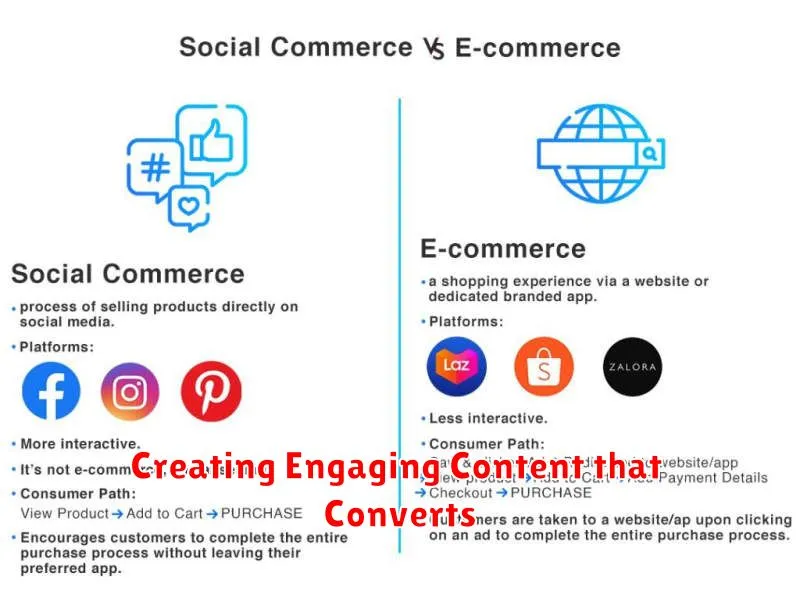
Engaging content is the cornerstone of successful social commerce. It’s not enough to simply post product photos; you need to capture your audience’s attention and inspire them to take action.
Start by understanding your target audience. What are their interests, needs, and pain points? Tailor your content to resonate with them specifically. Use a variety of content formats, such as videos, stories, and live streams, to keep your feed fresh and dynamic.
High-quality visuals are essential. Invest in professional photography or videography to showcase your products in the best possible light. Compelling captions are equally important. Write concise, informative descriptions that highlight the benefits of your products and encourage engagement. A clear call to action is crucial. Tell your audience exactly what you want them to do, whether it’s visiting your website, making a purchase, or leaving a comment.
Building a Strong Social Media Presence
Building a strong social media presence requires a strategic approach focused on consistent engagement and community building. Consistency is key. Regular posting keeps your audience engaged and your brand top-of-mind. Develop a content calendar to schedule posts and maintain a steady flow of valuable information.
Interaction with your followers is crucial. Respond to comments and messages promptly, participate in relevant conversations, and actively engage with your community. This fosters a sense of connection and loyalty.
Branding should be consistent across all platforms. Use the same logo, color scheme, and brand voice to create a unified and recognizable online identity. This reinforces brand recognition and builds trust with your audience.
Analyze your social media performance regularly. Track key metrics like engagement, reach, and follower growth to understand what’s working and what needs improvement. Use these insights to refine your strategy and optimize your efforts for better results.
Running Effective Social Media Ads
Social media advertising is a powerful tool for driving sales directly through platforms like Instagram, Facebook, and Pinterest. Targeted advertising allows you to reach specific demographics, interests, and behaviors, ensuring your ads are seen by the right audience. Effective ad campaigns require careful planning and execution.
Start by defining clear objectives for your campaign. Are you aiming for brand awareness, website traffic, or direct sales? Choosing the right objective will inform your ad format and targeting strategy. Precise targeting is crucial. Leverage the platform’s targeting options to reach your ideal customer profile. Experiment with different targeting parameters to optimize your reach and budget.
Compelling ad creatives are essential. High-quality images or videos that capture attention and clearly communicate your message are key. A clear call to action encourages viewers to take the desired next step, whether it’s visiting your website, making a purchase, or signing up for a newsletter. Continuously monitor and analyze your ad performance. Track key metrics like click-through rates, conversion rates, and cost per acquisition. Use this data to refine your targeting, creatives, and overall campaign strategy for optimal results.
Leveraging Influencer Marketing to Reach a Wider Audience
Influencer marketing is a powerful tool for expanding your reach in the social commerce landscape. By partnering with relevant influencers, you can tap into their established audience and credibility.
Choosing the right influencers is crucial. Look for influencers whose values and audience align with your brand. Micro-influencers, with their smaller but highly engaged followings, can be particularly effective for niche products.
Authenticity is key. Encourage influencers to integrate your products naturally into their content, rather than relying on forced or generic endorsements. This builds trust with their audience and increases the likelihood of conversions.
Clear campaign goals and measurable metrics are essential for tracking the success of your influencer marketing efforts. Track metrics like engagement, reach, and website traffic to assess the impact of your campaigns.
Integrating Social Commerce with Your Existing E-Commerce Platform
Seamless integration between your social media platforms and your e-commerce website is crucial for a successful social commerce strategy. This allows for a streamlined customer journey, from product discovery on social media to purchase completion on your website.
Consider these key aspects of integration:
- Product Catalog Synchronization: Ensure your product catalog is consistently updated across both platforms. This avoids discrepancies in pricing and availability, enhancing the customer experience.
- Unified Checkout Experience: Streamline the purchase process by offering a seamless checkout experience directly within the social media platform or through a quick redirect to your e-commerce site. Reduce friction points to minimize cart abandonment.
- Centralized Inventory Management: Integrating inventory management systems prevents overselling and ensures accurate stock information is displayed on both your social media platforms and your e-commerce website.
- Customer Data Integration: Connect customer data across platforms to gain valuable insights into customer behavior and preferences. This data can be used to personalize marketing efforts and enhance customer service.
By effectively integrating your social commerce efforts with your existing e-commerce platform, you create a cohesive and efficient buying experience for your customers.
Tracking and Measuring Your Social Commerce Success
Tracking and measuring your social commerce initiatives is crucial for understanding what’s working and what needs improvement. Without data-driven insights, your strategy is essentially guesswork.
Start by defining your key performance indicators (KPIs). These metrics will depend on your specific goals. Are you focused on brand awareness, website traffic, or direct sales? Some common KPIs include conversion rate, click-through rate, average order value, and customer lifetime value.
Utilize platform-specific analytics dashboards to gather data. Most social media platforms offer robust analytics tools that provide valuable information about audience engagement, reach, and demographics. Integrate this data with your e-commerce platform’s analytics to get a holistic view of your social commerce performance.
Regularly review your data and make adjustments to your strategy as needed. A/B testing different content formats, posting schedules, and even call-to-actions can help optimize your results over time.
Staying Ahead of the Curve in Social Commerce

The social commerce landscape is constantly evolving. To maintain a competitive edge, businesses must actively adapt and anticipate future trends. Continuous learning is crucial. Stay informed about emerging platforms, technologies, and consumer behaviors.
Experimentation is key. Don’t be afraid to try new strategies and features. A/B testing different approaches can provide valuable insights into what resonates with your target audience. Analyze your competitors’ social commerce strategies to identify potential opportunities and areas for improvement.
Embrace new technologies as they emerge. Augmented reality (AR) and virtual reality (VR) are increasingly being integrated into social commerce experiences, offering immersive and engaging shopping opportunities. Consider how these technologies can enhance your customers’ interactions with your brand.
Prioritize data analysis. Track key metrics like conversion rates, engagement, and customer lifetime value. This data will inform your strategies and allow you to optimize your social commerce efforts for maximum impact. By staying informed, experimenting, and adapting, your business can effectively navigate the dynamic world of social commerce and drive sustainable growth.
