
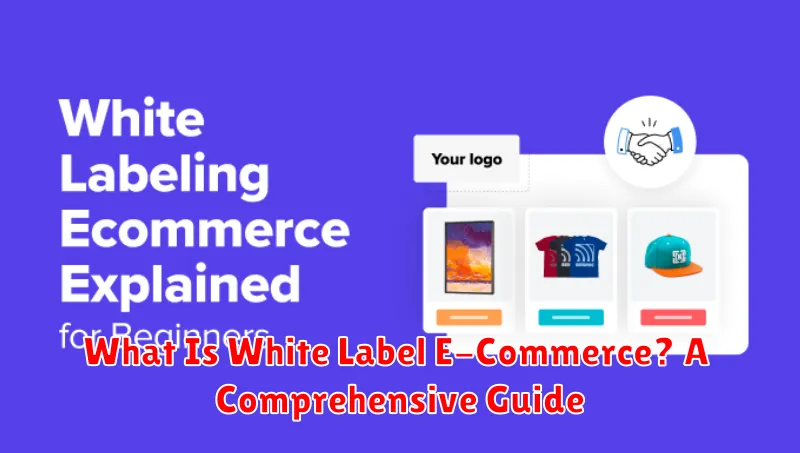
In the dynamic landscape of online retail, white label e-commerce has emerged as a powerful solution for businesses seeking to establish a rapid and efficient online presence. This comprehensive guide delves into the core concepts of white label e-commerce, exploring its benefits, drawbacks, and potential applications. Understanding what white label e-commerce is, and how it can be leveraged, is crucial for entrepreneurs and established businesses alike looking to capitalize on the ever-growing digital marketplace. From streamlining operations to reducing development costs, the advantages of a white label e-commerce platform can be substantial, offering a compelling alternative to building an online store from scratch. Whether you are a startup, a small business, or a large enterprise, this guide will provide you with the essential knowledge needed to navigate the world of white label e-commerce solutions.
This guide will cover various aspects of white label e-commerce, including choosing the right platform, customizing your storefront, integrating essential features, and optimizing for success. We will examine the key differences between white label solutions and other e-commerce models, helping you determine the best approach for your specific business needs. Discover how a white label e-commerce platform can empower you to launch your online store quickly, focus on your core brand, and ultimately achieve your business objectives in the competitive world of e-commerce. By understanding the intricacies of white label e-commerce, you can make informed decisions and unlock the potential for significant growth and profitability.
Defining White Label E-Commerce
White label e-commerce refers to a business model where a company resells an existing e-commerce platform to another business, which then rebrands and customizes it as their own. Essentially, a company purchases a ready-made online store, complete with underlying technology and infrastructure, and then tailors it to match their specific brand identity and product offerings.
Think of it like buying a plain white t-shirt and then adding your own logo and design. The core product (the t-shirt/e-commerce platform) is already manufactured, allowing businesses to focus on the branding and customization aspects rather than building everything from scratch.
This allows businesses to quickly launch their online presence without the time, resources, and technical expertise required to develop a platform independently. The white label provider manages the technical aspects like hosting, security, and updates, while the reseller focuses on marketing, sales, and customer service.
Benefits of Using a White Label Platform
Leveraging a white label e-commerce platform offers numerous advantages, allowing businesses to quickly launch and scale their online operations with reduced overhead and development time. Cost-effectiveness is a primary benefit, as it eliminates the need for extensive in-house development and maintenance. This also allows for faster time to market, enabling businesses to capitalize on opportunities and establish their online presence rapidly.
White label solutions offer significant scalability, allowing businesses to adapt to changing market demands and accommodate growth. Focus on core competencies is another key advantage. By outsourcing the technical aspects of e-commerce, businesses can dedicate resources to product development, marketing, and customer service.
Reduced risk is also a factor, as businesses don’t need to invest heavily in untested technology. White label platforms often come with built-in features and integrations, streamlining operations and providing access to essential functionalities like payment gateways and shipping providers.
Key Features of White Label E-Commerce Solutions

White label e-commerce platforms offer a range of essential features designed to streamline online business operations. Understanding these key features is crucial for selecting the right platform.
Inventory Management: Efficiently manage your product catalog, track stock levels, and automate reordering processes. A robust inventory management system is fundamental to smooth order fulfillment.
Order Processing and Fulfillment: Seamlessly process customer orders, manage shipping, and handle returns. Automated order processing reduces manual workload and improves efficiency.
Payment Gateway Integration: Securely process payments from customers through integration with popular payment gateways. Multiple payment options are vital for a positive customer experience.
Customization Options: Tailor the platform to your specific brand identity. Customization features allow you to create a unique storefront experience.
Choosing the Right White Label Platform for Your Business
Selecting the right white label e-commerce platform is a crucial decision for your business’s success. Several factors warrant careful consideration to ensure the chosen platform aligns with your specific needs and goals.
Scalability is paramount. As your business grows, your platform should be able to handle increased traffic and order volume without performance issues. Assess your current needs and projected growth to choose a platform that can scale accordingly.
Pricing models vary significantly among platforms. Some offer subscription-based models, while others charge transaction fees. Carefully analyze the different pricing structures and select the one that aligns with your budget and revenue projections. Consider potential hidden costs, such as setup fees or additional charges for specific features.
Customization options are essential for creating a unique brand experience. Evaluate the platform’s flexibility in terms of design, functionality, and integrations. Ensure it allows for sufficient customization to reflect your brand identity and meet your specific requirements.
Technical support is vital for troubleshooting issues and ensuring smooth operations. Investigate the platform’s support channels, response times, and available documentation. A reliable support system can significantly impact your business’s efficiency and customer satisfaction.
Customizing and Branding Your White Label Store
A key advantage of white label e-commerce is the ability to tailor the platform to reflect your unique brand identity. This customization goes beyond simply adding your logo. It involves creating a cohesive online experience that resonates with your target audience.
Visual Branding: Implement your brand colors, fonts, and imagery throughout the store. This includes everything from the website header and footer to product page layouts and email templates. Consistent branding reinforces brand recognition and builds trust with customers.
User Interface (UI) and User Experience (UX) Design: While the underlying platform provides the functionality, you have control over how customers interact with your store. Customize the navigation, product display, and checkout process to create a seamless and intuitive shopping experience. A user-friendly interface can significantly impact conversion rates.
Domain and Subdomain: Use your own domain name to further solidify your brand presence. This creates a professional image and avoids any association with the white label platform provider.
Content and Messaging: Craft unique product descriptions, category pages, and blog posts that align with your brand voice and resonate with your target audience. Compelling content enhances the customer experience and improves search engine optimization (SEO).
Integrating with Existing Systems and Tools
A key advantage of white label e-commerce is its potential for seamless integration with your existing business systems and tools. This minimizes disruption and maximizes efficiency.
Consider these key integration points:
- CRM (Customer Relationship Management): Integrating your white label platform with your CRM allows for streamlined customer data management, personalized marketing, and improved customer service.
- Inventory Management: Real-time inventory synchronization prevents overselling and ensures accurate stock information across all platforms.
- Order Fulfillment: Automating order processing and fulfillment through integration with existing warehousing and shipping systems streamlines operations.
- Payment Gateways: Securely process payments by integrating with preferred payment gateways, offering customers familiar and trusted options.
- Marketing Automation: Leverage existing marketing automation tools to target specific customer segments and drive sales through your white label storefront.
Evaluating the compatibility of a white label platform with your current infrastructure is crucial during the selection process. A smooth integration process is essential for a successful launch and ongoing operational efficiency.
Scaling Your Business with White Label E-Commerce
White label e-commerce offers significant advantages for scaling your business. The inherent flexibility allows for rapid growth without the constraints of developing and maintaining your own platform. As your customer base expands, a white label solution can seamlessly handle increased traffic and order volume.
Cost-effectiveness is another key benefit. Instead of investing heavily in infrastructure upgrades, you can leverage the existing infrastructure of your white label provider. This allows you to allocate resources towards other crucial growth areas like marketing and customer acquisition.
Furthermore, white label e-commerce facilitates expanding your product offerings quickly and efficiently. Adding new product lines or variations becomes a streamlined process, allowing you to respond to market demands and customer preferences with agility.
Examples of Successful White Label E-Commerce Businesses
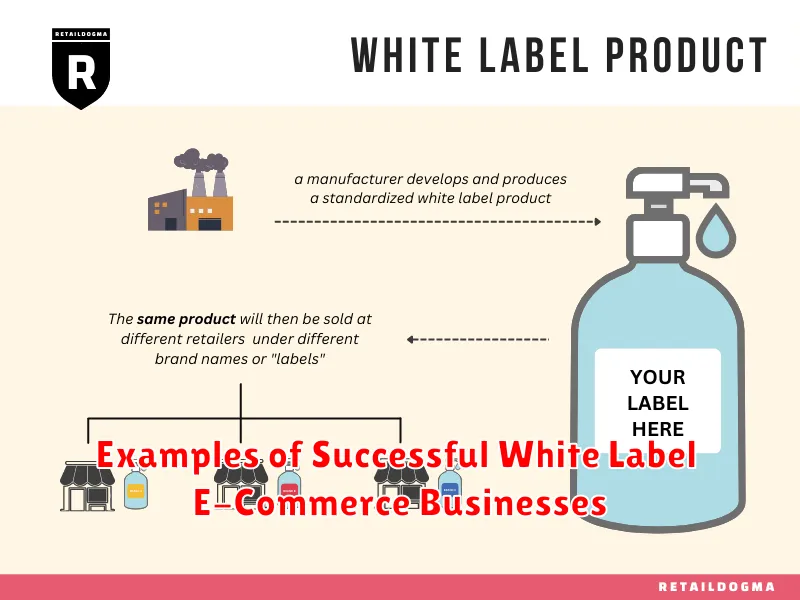
Examining successful businesses leveraging white label e-commerce can offer valuable insights. While specific company names and detailed data are confidential, we can explore generalized examples showcasing the potential of this model.
Fashion and Apparel: Imagine a popular fashion influencer launching their own branded online store. By using a white label platform, they can quickly establish an e-commerce presence without managing the technical complexities. This allows them to focus on design and marketing, reaching a pre-built audience and generating substantial sales.
Specialty Food and Beverage: A local artisanal food producer might utilize a white label solution to expand their reach beyond farmers’ markets and local deliveries. This provides a professional online storefront and streamlines order fulfillment, allowing them to scale their operations and reach a broader customer base.
Electronics and Gadgets: A company specializing in niche electronic accessories could adopt a white label platform to efficiently sell their products online. This reduces overhead compared to building a custom platform, allowing them to focus on product development and marketing within a specific niche.
The Future of White Label E-Commerce
The future of white label e-commerce appears bright, driven by evolving consumer demands and technological advancements. Personalization will be a key differentiator, with platforms offering increasingly granular control over branding and customer experience.
Artificial intelligence (AI) is poised to play a significant role, powering sophisticated product recommendations, dynamic pricing strategies, and automated customer service. This will enable white label businesses to optimize operations and enhance customer satisfaction.
Headless commerce architectures will offer greater flexibility, enabling businesses to decouple the front-end and back-end of their e-commerce platforms. This allows for seamless integration with various touchpoints and enables businesses to create unique and engaging shopping experiences across multiple channels.
The rise of augmented reality (AR) and virtual reality (VR) technologies promises to further transform the online shopping experience. These technologies offer the potential for immersive product demonstrations and virtual try-on experiences, blurring the lines between online and offline retail.
Finally, sustainability will become an increasingly important consideration. Consumers are increasingly conscious of the environmental impact of their purchases. White label platforms that prioritize sustainable practices, such as eco-friendly packaging and carbon-neutral shipping, are likely to gain a competitive edge.
